

L'ARPIAN — PIEMONTE CHARDONNAY
Piedmontese Chardonnay aged exclusively in stainless steel: from west-facing vineyards on sandy-clay soils. Fresh, fragrant and mineral — the most direct and authentic expression of Moasca Chardonnay.
Features
Colour
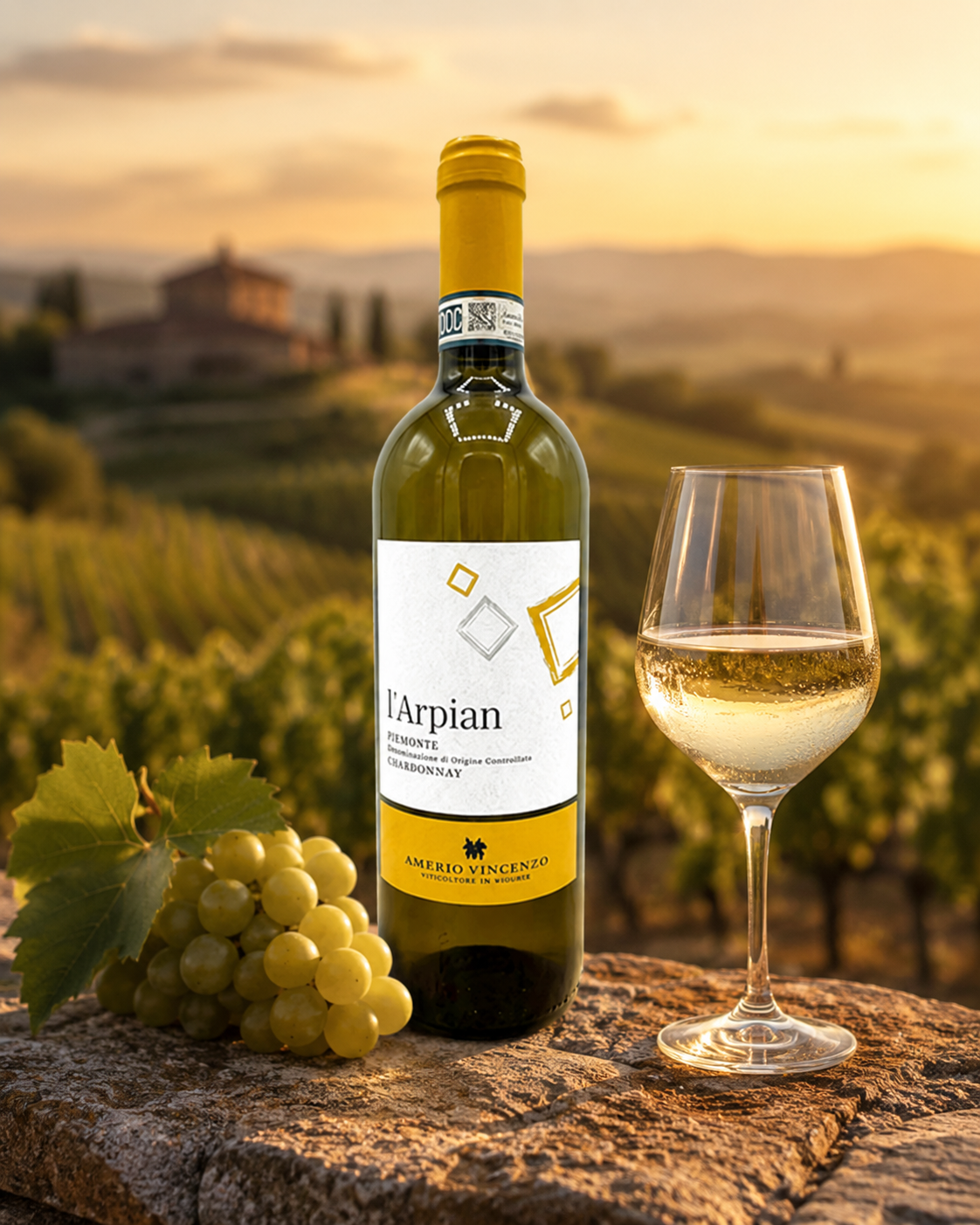
L’Arpian has a brilliant pale yellow colour with delicate greenish reflections, giving it a fresh, bright and inviting appearance in the glass.
Aroma
The bouquet is fresh and fragrant, with expressive notes of green apple, pear, citrus and white-fleshed fruit. These are complemented by delicate floral aromas and a subtle mineral character.
Taste
On the palate, the wine is fresh, balanced and well structured. Ageing exclusively in stainless steel preserves the purity of the Chardonnay grape, enhancing its vibrant acidity, savoury character and pleasing persistence. The finish is clean and elegant, with a refreshing citrus note.
Food Pairing
L’Arpian is an excellent aperitif and pairs beautifully with light starters, lake and sea fish, shellfish, vegetable risottos, white meats and fresh cheeses.
Serving Temperature
Serve well chilled between 6–8°C to enjoy its freshness, fragrance and balance at their best.
Appellation and Origin
L’Arpian is classified as Piemonte Chardonnay DOC and is produced in Moasca, Asti.
Grape Variety
The wine is made from 100% Chardonnay, giving it its fresh fruit character, elegant structure and clean finish.
Vineyard
The vineyards are situated at an altitude of approximately 200–350 metres and have a westerly aspect.
Harvest
The grapes are harvested in late August or early September, when they have reached the ideal balance of ripeness and acidity.
Soil
The vines grow in medium-textured soils with a tendency towards sand, helping to produce a fresh and refined style of Chardonnay.
Cellaring Potential
This wine is best enjoyed within three to four years, while its fruit character and lively freshness remain at their most expressive.
Winemaking
The grapes are harvested by hand, destemmed and given a six-hour cold maceration. They are then gently pressed and undergo static cold settling before fermentation in stainless steel at a controlled temperature.
Ageing
The wine spends six months on its lees in stainless steel, with bâtonnage used to add texture and complexity. It is bottled in spring to preserve its freshness and aromatic character.